


Method of using polyaluminum chloride with Polyacrylamide
Release time: 2026-01-19
In wastewater and water purification applications, the combination of polyaluminum chloride (PAC) and polyacrylamide (PAM) represents the industry's predominant high-efficiency flocculation solution. As an inorganic flocculant, PAC adsorbs suspended particles and colloids in water while coagulating suspended particles. PAM, as an organic flocculant, forms large flocs to accelerate sedimentation. The synergistic action of these two agents significantly enhances treatment efficiency and reduces chemical costs.
I. Core Matching Principle: The Underlying Logic of Synergistic Effect
Polyaluminum chloride (PAC) hydrolyzes to generate polynuclear hydroxyl aluminum ions, which adsorb suspended particles and colloids in water, destabilizing them into microflocs (the "coagulation" process). However, these microflocs settle slowly and remain prone to dispersion. Polyacrylamide (PAM), with its high molecular weight, adsorbs multiple microflocs and forms dense, coarse flocs through bridging (the "flocculation" process), accelerating sedimentation and separation. The combination of PAC and PAM achieves an efficient synergistic effect of "coagulation + flocculation," yielding treatment outcomes far superior to those of single-agent use.

II. Standard Pairing Usage Steps
For industrial wastewater, municipal sewage, or water purification, the PAC and PAM combination must follow the principle of 'PAC first, then PAM, staged dosing, and thorough mixing.' The specific steps are as follows:
1. Pharmaceutical dissolution pretreatment
PAC dissolution: Solid PAC is dissolved at a concentration of 1%-3% (i.e., 10-30g PAC dissolved in 1L of water), stirred for 3-5 minutes until completely dissolved, and left to stand briefly to remove a small amount of insoluble matter before use. Liquid PAC can be directly diluted 2-5 times before addition to avoid uneven local flocculation caused by excessively high concentration.
PAM dissolution: Dissolve anionic PAM (commonly used in wastewater treatment) at 0.1%-0.3% concentration. Stir at 60-80 rpm for 15-20 minutes to ensure complete dissolution without clumping (clumped PAM becomes ineffective and causes pipeline blockage). The solution must be used within 24 hours.
2. Addition Sequence and Time Interval
The procedure strictly follows the "PAC before PAM" sequence, with an injection interval of 30-60 seconds. First, add PAC solution to the treated water and stir rapidly (150-200 rpm) for 1-2 minutes to ensure complete mixing and coagulation. Then, add PAM solution and switch to slow stirring (50-80 rpm) for 2-3 minutes to allow adequate flocculation growth, preventing flocculation breakage due to excessive agitation.
3. Sedimentation and Effect Observation
After stirring, allow the mixture to settle for 10-30 minutes, then observe the clarity of the effluent, the size of flocs, and the settling velocity. If the effluent appears turbid or the flocs are fine, it may indicate insufficient PAC dosage. If the flocs float and do not settle, it could be due to excessive PAM dosage or an incompatible model, requiring immediate adjustment.
III. Key Parameters: Addition Ratio and Dosage Control
The dosing ratio of PAC to PAM should be adjusted based on water quality and pollutant types, with no fixed value. It must be determined through pilot testing. The core reference range is as follows:
1. Conventional dosing ratio
The mass ratio of PAC to PAM (solid) typically ranges from 50:1 to 200:1. For municipal and domestic wastewater, the standard ratio is 100:1 to 150:1. In industrial wastewater (e.g., dyeing and electroplating effluents) with high pollutant concentrations, the ratio may be adjusted to 80:1 to 120:1.
2. Reference Range for Dosage
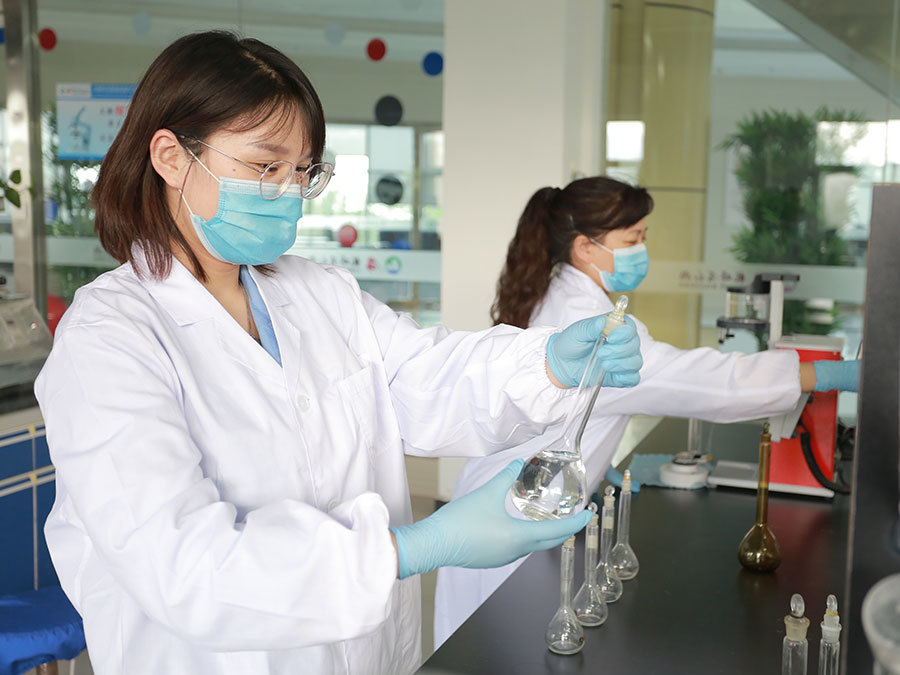
PAC dosage: 50-100 mg/L for domestic sewage and 100-300 mg/L for industrial wastewater; PAM dosage: 0.5-1 mg/L for domestic sewage and 1-3 mg/L for industrial wastewater. It is recommended to conduct a pilot test before formal application by taking a 1L water sample and adding the chemicals in gradient proportions to determine the optimal dosage.
IV. Tips for Different Scenarios
1. Municipal and domestic sewage treatment
Anionic PAM (molecular weight 8-12 million) is recommended, with PAC dosage at approximately 80mg/L and PAM dosage at 0.8mg/L. This treatment is ideal for water bodies with low COD and high suspended solids content, effectively improving sedimentation tank efficiency.
2. Industrial Wastewater Treatment (Dyeing/Electroplating/Papermaking)
For dyeing wastewater, anionic PAM (molecular weight 12-15 million) is selected with a PAC:PAM ratio of 100:1. PAC is first added to demulsify and decolorize, followed by PAM for flocculation. For electroplating wastewater containing heavy metals, the pH is first adjusted to 8-9, PAC is added to precipitate heavy metals, and PAM is then added to accelerate separation.
3. Drinking Water Purification
Food-grade PAC and non-ionic PAM were selected, with PAC dosage of 30-50 mg/L and PAM dosage of 0.3-0.5 mg/L. The chemical residues were strictly controlled to comply with the GB 15892-2020 drinking water standard.
V. Common Issues and Avoidance Techniques
- Fine flocs that do not settle: Increase PAC dosage, adjust PAM type (switch to high molecular weight product), or extend mixing time.
- Drug clumping clogging pipelines: Control the rotation speed during PAM dissolution to avoid excessive local concentration, and filter after dissolution before readdition; allow PAC to settle after dissolution to remove insoluble particles.
- The treatment effect is unstable: when water quality fluctuates, promptly adjust the dosage and proportion of chemicals, ensuring sufficient PAC dosage first, then fine-tune PAM dosage.
Related Blog

Hotline:
Address:The west industrial cluster area of Jiaozuo City, Henan province, China
Email:aefk@aefkchem.com
Foreign Trade Manager :+86-15803910375
Copyright©2024 Henan Aierfuke Chemicals Co., Ltd www.300.cn SEO This website supports IPv6 Privacy Policy  豫公网安备 41080302000029